Electronic City's IT Corridor and Its Pull on Hosa Road Housing
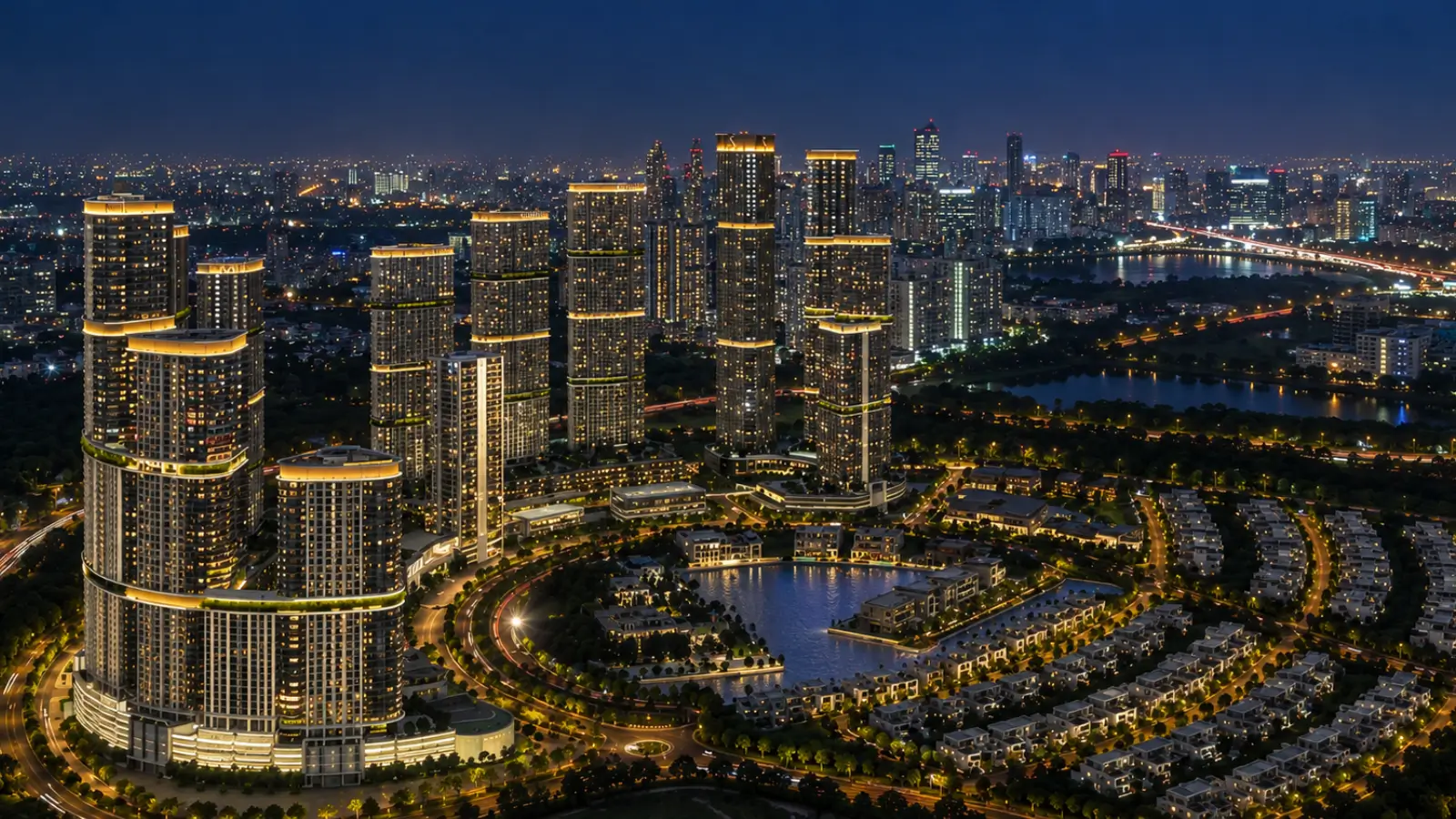
Residential demand in Bengaluru follows office space with a lag of a few years, and Electronic City has been generating that demand for three decades....
Residential demand in Bengaluru follows office space with a lag of a few years, and Electronic City has been generating that demand for three decades. Understanding Electronic City IT corridor housing demand means looking at which employers sit where, and at how many different sectors they represent.
Start with the map. Electronic City lies 4 to 7 km south of the Hosa Road corridor. TCS and HCL Technologies sit at about 4 km, ten to twelve minutes away. The Infosys campus at Electronic City Phase 1 runs roughly 5.5 km at fifteen minutes. Velankani Tech Park and CGI Cyber Park are both around 6 km, with HP, Wipro, DXC and Genpact offices in the 5 to 7 km band.
Two employers outside the IT services cluster change the picture materially. Bosch sits about 0.5 km from the corridor, representing engineering and manufacturing research rather than software services. Biocon Park and the Bengaluru Life Sciences Park at Bommasandra lie roughly 9 km down Hosur Road, representing biotechnology. Those three sectors hire on genuinely different cycles.
Sector mix rather than raw headcount is what makes IT corridor impact on Bangalore real estate durable in one location and fragile in another. A corridor dependent on a single industry sees rental demand and resale liquidity fall together when that industry slows. Draw on software services, engineering research and biotechnology at once, and three independent demand curves support the same housing stock.
That shows up directly in rental figures. Corridor two-bedroom homes let at about Rs 33,000 to Rs 38,000 a month and three-bedroom homes at Rs 57,000 to Rs 63,000, producing yields of 3.5% to 4% semi-furnished and 4% to 4.5% furnished. Those numbers have held while the corridor absorbed substantial new supply, which is the practical test of demand depth.
Electronic City employment and housing also interact through commute infrastructure rather than distance alone. Since August 2025 the Yellow Line has connected the corridor to Electronic City without touching road traffic, which widens the tenant pool to include people who do not drive. Before commissioning, an employee without a car faced a bus commute on a congested arterial; that constraint has now gone.
Office supply is the leading indicator worth tracking for anyone betting on Electronic City IT corridor housing demand. Residential absorption follows commercial leasing with a lag of a few years, so new campus construction and occupancy announcements within the 4 to 7 km band say more about rental demand three years out than any current vacancy figure does. Watch what is being built rather than what is currently full.
One trend worth watching rather than assuming. Hybrid working has reduced the number of weekly office trips for a large share of this workforce, which lengthens the acceptable commute radius and softens the premium on absolute proximity. That change favours corridor positions with good connectivity over addresses inside the employment district itself, though how permanent it proves is genuinely uncertain. See employer distances in full for the current position.
Related reading: every tech park mapped by distance.
FAQs
Which employers drive housing demand near Hosa Road?
Electronic City at 4 to 7 km carries Infosys, TCS, HCL, Wipro and the Velankani and CGI parks. Bosch sits about 0.5 km away, and Biocon Park at Bommasandra roughly 9 km.Why does sector mix matter for property investors?
IT services, engineering research and biotechnology hire on different cycles. Three independent demand curves supporting the same housing stock is more durable than dependence on a single industry.What rents does this employment base support?
Two-bedroom homes let at about Rs 33,000 to Rs 38,000 a month and three-bedroom homes at Rs 57,000 to Rs 63,000, yielding 3.5% to 4.5% depending on furnishing.Has the metro changed demand patterns?
Yes. Yellow Line service since August 2025 connects the corridor to Electronic City without road traffic, widening the tenant pool to include employees who do not drive.
Related Articles
Peripheral Corridors, SEZs and the Next Wave of Bengaluru Growth
Cities grow outward along employment rather than along roads, and confusing the two is the most expensive mistake available to a property buyer....
Financial Year-End Property Buying — Tax Considerations Before 31 March
The weeks before 31 March generate more property enquiries than any period except the festive season, and tax is the reason. Understanding year end...
Should You Buy Property During the Festive Season? Offers Decoded
Festive campaigns are the most concentrated marketing period in Indian real estate, and they work because the cultural timing is genuine even when the...
Government Policies Supporting Bengaluru Real Estate in 2026
Policy shapes a property market slowly and then permanently, which is why buyers tend to underrate it. Among government policies boosting Bangalore...